A recommendation brings a potential customer to you. Your website should help them decide whether to get in touch. If it does not explain exactly what you do, where you work and how to request a quote, some of that trust is lost before the first conversation.
A website for a trade or local business should bring together a clear offer, real evidence of your work and an easy way to contact you. Below, we explain what that means for a tradesperson, salon, repair service or small business looking for better enquiries.
Say what you do and where you work straight away
Imagine someone searching for a tradesperson in the evening because their door will not close. They open several websites on their phone. They are not looking for a company vision. They want to know whether you repair that kind of door, cover their neighbourhood and have a number they can call.
The first screen should answer three questions: what you offer, who it is for and where you work. A company name and attractive logo cannot explain that alone. “Quality you can trust” could appear on almost any website. “Bespoke kitchens in Osijek and the surrounding area” tells customers whether they are in the right place.
Below the heading, add one short sentence explaining the service and a button for the next step. If you work by appointment only or do not take small repairs, say so. Clear boundaries can save conversations that would never lead to a job.
Describe services the way customers ask for them
“Complete solutions for your home” does not explain whether you paint walls, lay tiles or handle full renovations. Name the actual jobs. For each key service, explain what is included, what you need from the customer and how arrangements work.
A garage benefits from separate descriptions of servicing, diagnostics and brake replacement. A salon needs a clear distinction between cuts, colouring and occasion styling. A carpenter can show kitchens and fitted wardrobes with an explanation of measuring and installation. Keep technical terms where needed, but connect them to a problem customers recognise.
A separate page makes sense when there is something useful to say about a service. If only the heading would change, keep one well-organised page instead. You do not need ten nearly identical pages to look professional.
Google Search Central: helpful, reliable contentShow the work, details and people behind it
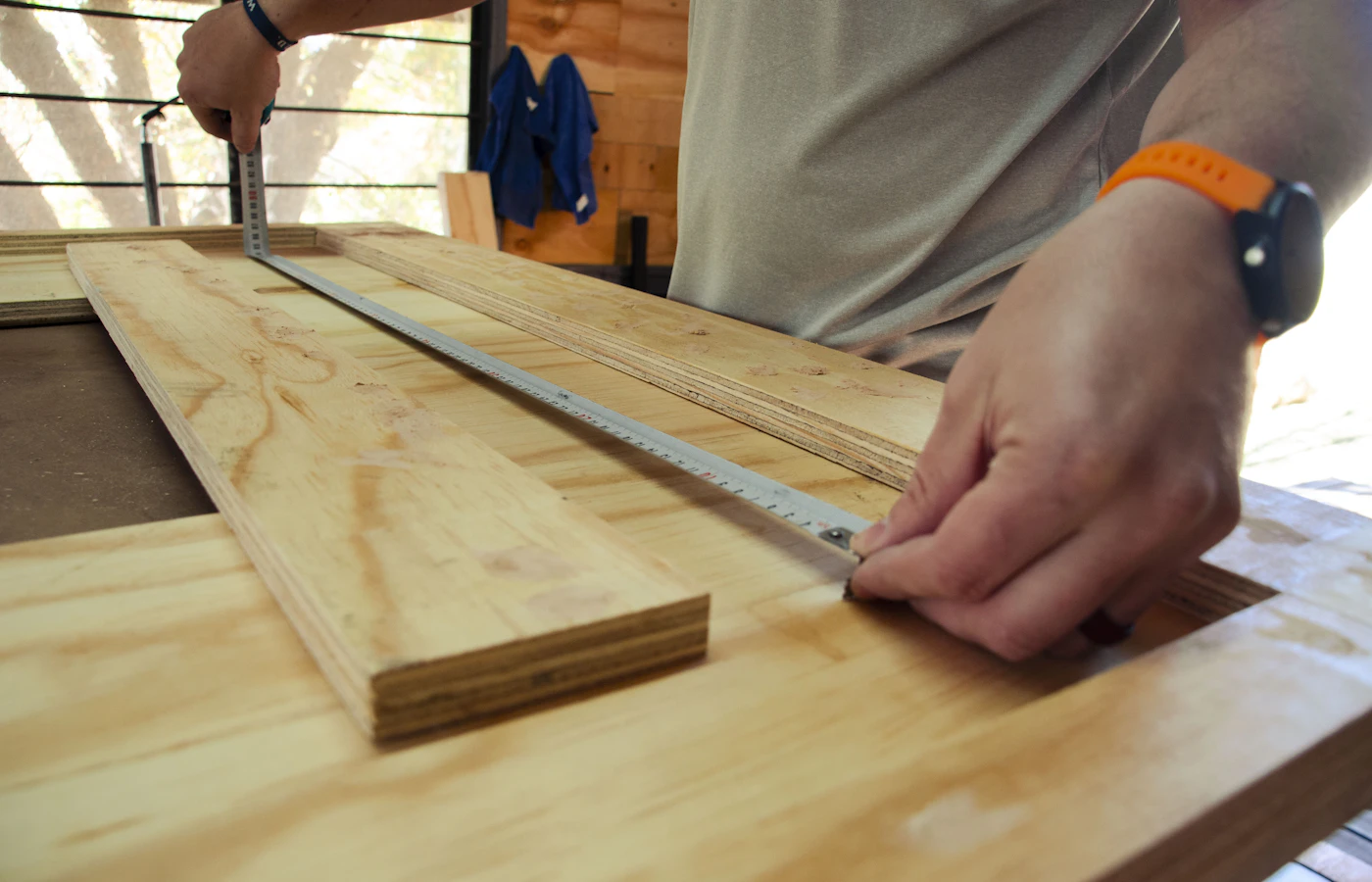
If you lay tiles, show the joints, a neatly finished corner and the completed bathroom. If you make furniture, show it in a real room. These photos tell customers more than “we care about every detail”.
Add brief context to selected work: what was needed, which part you handled and what the photo shows. Every project does not need a long story. Two precise sentences are often enough.
Phone photos in good daylight can work well. Clear clutter, clean the lens and capture both the whole and the detail. Obtain permission before publishing someone else's space or recognisable people. Stock photos can illustrate a topic, but should never be presented as your completed work.
Make it clear who is behind the website
Someone who does not know you wants to know who receives their phone number or enters their home. State the real business name, who runs it, how to contact you and where you operate. A short explanation of your personal role and working process is more useful than a long third-person company story.
If you have reviews, publish genuine ones with permission and let people check the source where available. If you do not, show your process, workshop or qualifications you can substantiate. Empty space does not need invented praise.
Do not claim “20 years of experience”, “hundreds of happy clients” or guarantees unless you can prove and explain them. Accurate information and real work create a stronger impression. Check business details and notices, too: a copied template with another company's name undermines trust immediately.
Explain how pricing works and what happens next
A customer does not need a final quote for a bespoke kitchen on your website. They need to understand how you reach it. Do dimensions, materials, the existing surface, site access or travel affect the price? Explain what actually changes the scope.
If you publish a starting price, explain what it includes and when extra work or visits are charged. “From” without context leaves customers guessing. If pricing requires an inspection, explain how to arrange it and whether it is charged.
Then describe the next steps: a short conversation, a visit or measurements, a quote and an agreed date. Give a realistic response time if you can keep it. Do not promise an hour if you will only reply after returning from a job.
Contact should be easy to find and should work
A phone number should open a call on mobile. Email should be readable and clickable. If you accept WhatsApp enquiries, add a direct link. Choose the main contact method around how you work: appointments for a salon, or an estimate request for larger building jobs.
Label the button “Request a quote”, “Book an appointment” or “Call us” to match its action. “Learn more” says little when the next step is a conversation. Repeat contact options after services and work, where customers have a reason to get in touch.
For an initial enquiry, a name, reply method and brief description are usually enough. Location and photos may help estimates, but do not request details you do not yet need. Explain what is useful to send. Show a clear confirmation or error after submission, and test that messages actually reach you.
Test the website on your phone, with your own thumb
Open your website on a phone and try what you expect customers to do. Can you read a service without zooming, tap the phone number accurately, close the menu and fill in the form with the keyboard open? These tests reveal problems a large monitor can hide.
Keep text readable, buttons well spaced and key information accessible without waiting through animations. Size photos for their display. Autoplay video and large pop-ups can obstruct the very task someone came to complete.
Use PageSpeed Insights for technical checks. Core Web Vitals cover main-content loading, interaction response and visual stability. Use the results to identify problems; a score alone does not predict enquiry volume. Review real visitor data where available alongside lab measurements.
web.dev: loading, responsiveness and visual stabilityConnect your website to the area you serve
State your town and the areas you genuinely cover. Customer-facing premises need an address, opening hours and helpful directions. A mobile trade needs clear coverage and arrangements. Do not claim a branch where you have none.
Keep your website and Google Business Profile consistent: name, phone, public address and opening hours. If visits require an appointment, say so. Google requires accurate business representation, with specific rules for service-area businesses.
For the website itself, start with a clear title, real service descriptions, useful links and an indexability check. Repeating the town in every sentence will not answer customer questions. Neither a good website nor a complete profile guarantees a search position.
Google: accurate business representationFor help with your profile, read our Google Maps and Google Business Profile guide.
A professional impression comes from consistent details
You do not need many effects. Choose readable typography, clear contrast and a few consistent colours. Leave space between paragraphs. Make photos feel like part of the same website, rather than unrelated files collected in a gallery.
Language matters just as much. Write as you would explain the job in person: clearly, politely and without empty grand words. “After measuring, we send a quote covering materials and installation” says more than “a personal approach to every project”.
Before launch, check spelling, consistent service names, working links, current hours and your domain email if used. Agree who controls the domain, hosting and business email. Your website should remain under your control when its maintainer changes.
How should this fit together on the homepage?
A small local business can have a simple homepage. Follow customers' questions in order, with each section providing a reason to continue.
- At the top: the specific service, coverage area and main contact button.
- Next: key services with short explanations and links to details.
- Then: real work or other verifiable evidence of what you do.
- Before contact: how you work, pricing or estimates, and answers to common questions.
- At the end: a short invitation to get in touch, contact details and current business information.
Checklist: open your website and check
Ask someone unfamiliar with your business to find a service and try sending an enquiry. What is obvious to you may not be obvious to them.
- The first heading clearly explains what we offer and where we work.
- Key services have specific descriptions, including important boundaries.
- Work and photos presented as ours really are ours, and we have permission to publish them.
- Visitors can check who runs the business.
- Pricing or the estimate process is explained without vague promises.
- The main button does what its label promises, and the phone number starts a mobile call.
- A test enquiry actually arrives, and customers see a confirmation or clear error.
- The website and form work on a narrow mobile screen.
- Website and Google profile details are current and consistent.
- Content maintenance and domain and hosting access responsibilities are agreed.
If several things need attention, start with your offer and contact details. Then review your work, business information and mobile layout. Additional content and visual refinements can follow.
Local business websites: frequently asked questions
Does a small trade business need a website if it already has Instagram?
Instagram can show everyday work well, and a Google profile helps people find the business. A website has a different role: services, work, process and contact in one place, without searching old posts. Whether to invest depends on how customers find you and what information they lack.
Is one page enough to start?
For a focused offer, one clear page can be enough. If different services raise different questions, separate pages may help. Choose the page count around what customers need, not which package sounds bigger.
What should I fix first if my website gets no enquiries?
First, check whether relevant visitors arrive and contact works. Then review whether your offer and coverage are clear and whether there is enough reason to trust you. Low traffic and plenty of traffic without enquiries are different problems. A new design alone may not solve both.
Do all photos need to be professional?
No. Clear, well-lit photos of real work are more useful initially than a generic gallery unrelated to your offer. A professional shoot makes sense when you need consistent images of premises, team or work. Always secure publication rights and never present someone else's photo as your own project.
What is missing before that first enquiry?
Local Craft Media helps trades and small local businesses present their services clearly online. Send us a link and tell us what you want visitors to do. We can agree on a review of your existing site or a new website, with a scope that suits your business.
Let's talk about your websiteIf you already have an idea in mind, send a project enquiry.
Sources and photos
The practical examples and suggested structure are our editorial recommendations. Technical explanations and Google profile rules were checked against official guidance on 21 October 2026.
- Google Search Central: helpful, reliable content
- web.dev: loading, responsiveness and visual stability
- Google: accurate business representation
Photos by Ryno Marais and Jametlene Reskp are used under the Unsplash licence. They illustrate the topic and do not show Local Craft Media projects or clients.